Table of Contents
How to Measure Blood Pressure at Home
Monitoring your blood pressure at home is a simple yet powerful way to take charge of your health, especially when managing conditions like diabetes, hypertension, or heart disease. Knowing how to check blood pressure accurately can provide invaluable insights for you and your doctor, helping to prevent serious complications down the line. You don’t need a medical degree to do it right – just a clear plan and the right tools. This guide will walk you through doctor-approved steps to ensure you’re getting reliable readings every time.
Ingredients List (What You’ll Need)
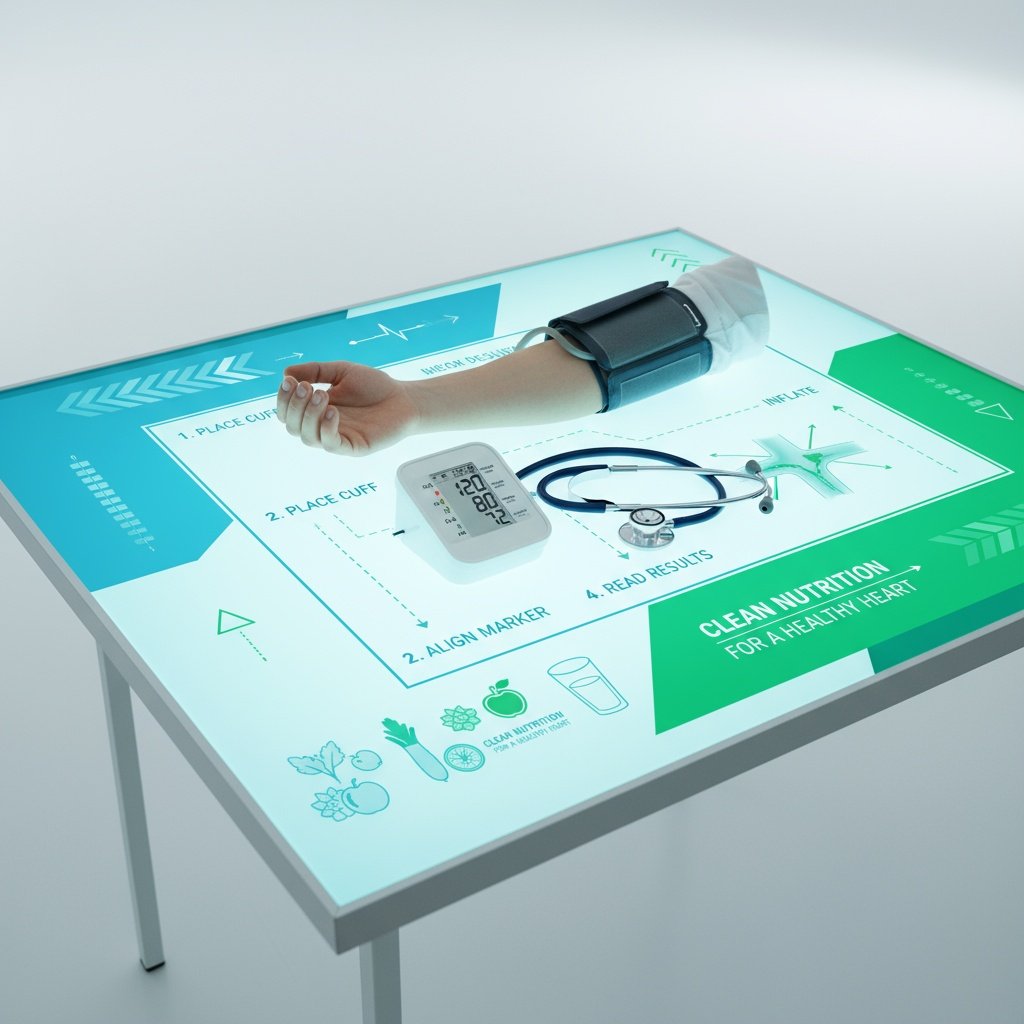
To get started, gather these essential “ingredients” for an accurate blood pressure measurement:
- Reliable Blood Pressure Monitor:
- Automatic Upper Arm Cuff: This is generally recommended over wrist or finger monitors for accuracy. Look for one validated by organizations like the American Medical Association (AMA) or the British and Irish Hypertension Society (BIHS). Many models offer memory storage for tracking readings.
- Substitution: While not ideal for routine checks, manual cuffs with a stethoscope can be used if you or someone assisting you is trained.
- Correct Cuff Size: This is crucial! Most monitors come with a standard cuff, but make sure it fits your arm properly.
- How to choose: Measure your arm’s circumference midway between your shoulder and elbow. The cuff’s bladder should cover 80% to 100% of this distance. Too small a cuff will give a falsely high reading; too large, a falsely low one.
- Quiet Environment: Choose a calm, comfortable room where you won’t be interrupted.
- Comfortable Chair and Table: You’ll need a place to sit comfortably with your arm supported.
- Tracker/Logbook (Optional but Recommended):
- Small notebook and pen, or a digital app (like one from StopComplications!).
Introduction
Have you ever wondered if your blood pressure readings are truly accurate when you visit the doctor’s office? Many patients experience “white coat syndrome,” where their blood pressure temporarily rises due to anxiety. This can lead to misinterpretations and even unnecessary medication changes. Learning how to check blood pressure at home empowers you to get a more realistic picture of your daily health, providing crucial data for managing chronic conditions. We’re here to offer a simple, actionable solution that puts control back in your hands.
Why It Matters
High blood pressure, or hypertension, is often called the “silent killer” because it frequently has no symptoms, yet it significantly increases your risk of heart attack, stroke, kidney disease, and even vision loss. For individuals living with diabetes, hypertension doubles the risk of cardiovascular complications. Regularly checking your blood pressure at home helps:
- Catch problems early: Consistent monitoring can flag high readings before they become critical.
- Assess treatment effectiveness: You can see how well your lifestyle changes or medications are working.
- Reduce “white coat syndrome”: Get accurate readings in your relaxed home environment.
- Empower you: Understanding your numbers helps you actively participate in your health journey.
- Provide valuable data for your doctor: Better data leads to better decisions for your care. Studies show that patients who monitor their blood pressure at home often achieve better blood pressure control.
Step-by-Step Guide: Your Home Blood Pressure Check
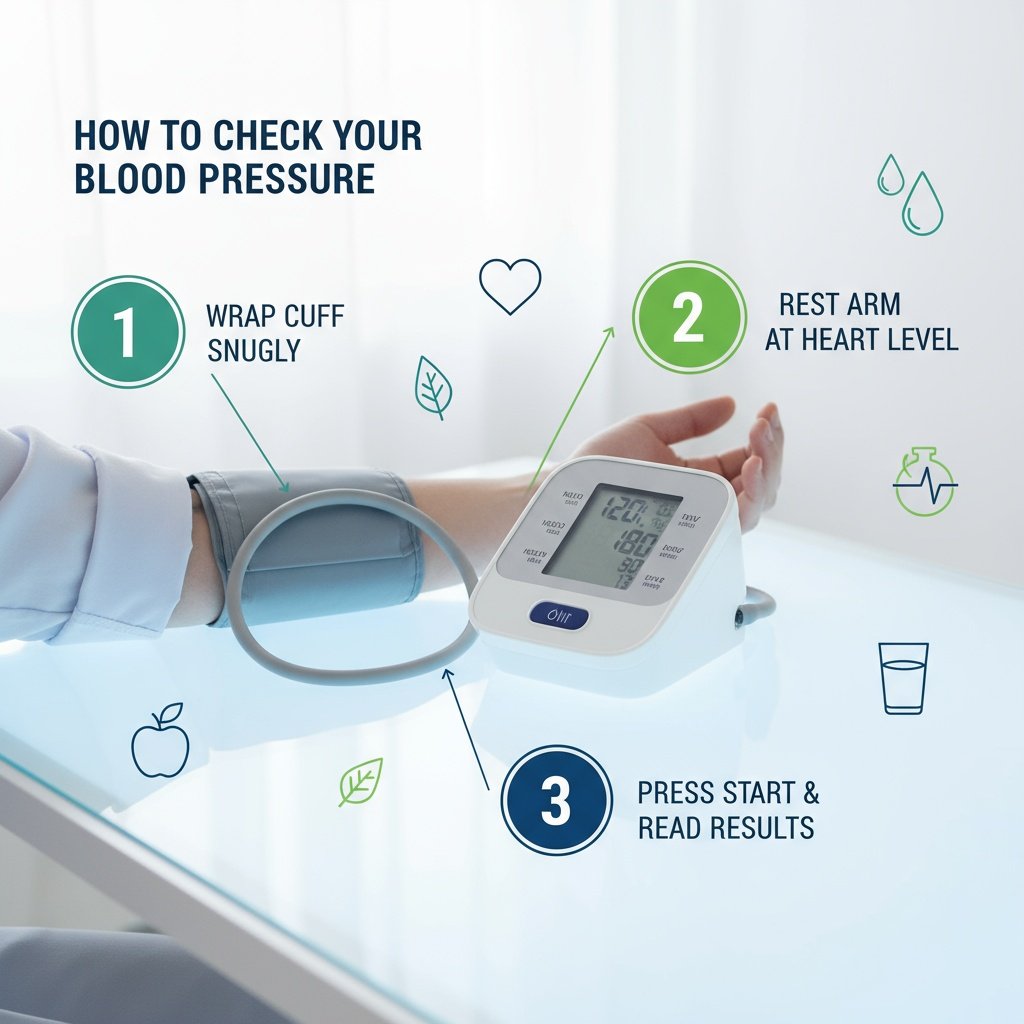
Follow these simple steps for accurate readings:
1. Prepare for Your Reading
✅ Relax: Sit quietly for at least 5 minutes before taking your measurement. Avoid caffeine, exercise, and smoking for 30 minutes prior.
✅ Bathroom break: Empty your bladder; a full bladder can affect readings.
2. Position Yourself Correctly
✅ Sit upright: Sit in a chair with your back supported and both feet flat on the floor. Do not cross your legs.
✅ Arm placement: Rest your arm on a table so that the blood pressure cuff is at heart level.
3. Apply the Cuff
✅ Bare arm: Roll up your sleeve or remove any tight clothing from your upper arm.
✅ Correct fit: Place the cuff directly on your bare skin, about one inch above your elbow. The tubing should run down the center of your arm. It should be snug but not uncomfortably tight – you should be able to slip two fingers under the top edge.
4. Take the Measurement
✅ Stay still and quiet: Remain silent and still while the machine takes the reading. Don’t talk or move.
✅ Take multiple readings: Wait 1-2 minutes between readings and take at least two to three for the most accurate average.
5. Record Your Results
✅ Write it down immediately: Note the date, time, and your systolic (top number) and diastolic (bottom number) readings. Include your pulse rate if your device measures it.
💡 Quick Tip: For consistency, try to take your blood pressure at the same time every day, such as in the morning before medication and in the evening.
Expert Insight
“Consistent home blood pressure monitoring empowers both patients and physicians,” says cardiothoracic surgeon, Dr. Sarah Jenkins. “It provides a more accurate reflection of a patient’s true blood pressure patterns, away from the stress of a clinical setting. This data is critical for making informed decisions regarding treatment adjustments and preventing long-term cardiovascular damage.”
“Early detection through home monitoring is a game-changer for chronic disease management,” adds Dr. Mark Harrison, an endocrinologist. “For individuals with diabetes, maintaining optimal blood pressure is just as vital as blood sugar control in preventing diabetic complications like kidney disease and neuropathy.”
Common Mistakes to Avoid
- Measuring on clothes:
- Correction: Always place the cuff directly on your bare skin. Clothing can interfere with accurate pressure.
- Using the wrong cuff size:
- Correction: Measure your arm and ensure your cuff matches the recommended size for accurate readings.
- Talking or moving during measurement:
- Correction: Stay completely still and silent. Talking, even whispering, can raise your systolic reading by 10 mmHg or more.
- Not resting beforehand:
- Correction: Always sit quietly for at least 5 minutes before taking your blood pressure.
- Taking only one reading:
- Correction: Take at least two readings, 1-2 minutes apart, and average them for the most reliable number.
How to Track or Apply It
Once you have your readings, the real power comes from tracking them over time. You can:
- Use a simple notebook: Jot down your date, time, and readings. This physical record is easy to review.
- Utilize digital apps: Many blood pressure monitors sync with smartphone apps that automatically log your data.
- Export data: Some apps allow you to export your readings as a PDF or spreadsheet, which you can then share with your doctor.
Regularly review your trends. Are your numbers generally going up or down? This consistent data helps you and your doctor make informed decisions about your diet, exercise, and medication. Don’t forget that StopComplications free tools include easy-to-use blood pressure trackers!
Conclusion
Understanding how to check blood pressure at home is a vital skill for anyone committed to preventing chronic disease complications. By following these simple steps and avoiding common mistakes, you gain a powerful tool for monitoring your health and working proactively with your healthcare team. Remember, small steps today can prevent big complications tomorrow. Empower yourself with knowledge and consistent action.
Ready to take the next step in mastering your health? Visit StopComplications.com today to download our free blood pressure tracker and explore our other helpful resources designed to help you live a healthier, longer life!
FAQs
Q: How often should I check my blood pressure at home?
A: If you have high blood pressure or are at risk, your doctor will advise you. Generally, twice a day (morning and evening) for a week or two, then periodically as advised, is common.
Q: What is a “normal” blood pressure reading?
A: A normal blood pressure reading is usually considered to be below 120/80 mmHg. Discuss your target numbers with your doctor.
Q: Can I use a wrist blood pressure monitor?
A: Upper arm cuffs are generally more accurate and recommended. Wrist monitors can be used if an upper arm cuff doesn’t fit, but they require very precise positioning. Always check with your doctor for advice on the best type for you.
Q: My readings are consistently high at home. What should I do?
A: If you consistently get high readings (above 130/80 mmHg or as advised by your doctor), keep tracking them and schedule an appointment with your doctor to discuss your results. Do not make any changes to your medication without consulting them.