Table of Contents
Salt vs Sodium: What’s the Difference?
Did you know that the average American consumes over 3,400 milligrams of sodium daily, far exceeding the recommended 2,300 mg? For individuals managing chronic conditions like diabetes or hypertension, understanding the critical distinction between salt vs sodium isn’t just helpful – it’s vital for your health. Many people struggle with finding tasty, low-sodium alternatives, but by the end of this post, you’ll have actionable strategies to cut hidden sodium and make healthier choices effortlessly.
Ingredients List
To help you visualize the difference and make informed choices, here’s an example of how ingredients might look, along with healthier substitutions:
- High Sodium Seasoning Packets: (e.g., instant noodle seasoning)
- Sodium Content: Often over 1,000 mg per packet.
- Try This Instead: Homemade spice blends (garlic powder, onion powder, paprika, dried herbs like oregano and basil), nutritional yeast for a cheesy flavor.
- Canned Soups (Regular):
- Sodium Content: 700-1,000 mg per serving.
- Try This Instead: “No Salt Added” canned soups, homemade vegetable broths, or fresh soups made from scratch with low-sodium broth.
- Processed Meats: (e.g., deli ham, bacon, sausages)
- Sodium Content: 300-600 mg per serving.
- Try This Instead: Freshly cooked chicken breast, turkey, baked fish, or plant-based protein options seasoned with herbs and spices.
- Commercial Salad Dressings:
- Sodium Content: 200-400 mg per 2 tablespoons.
- Try This Instead: Olive oil and vinegar, lemon juice, herb-infused oils, homemade dressings using fresh ingredients.
- Cheese: (especially processed cheese slices)
- Sodium Content: 150-300 mg per slice/ounce.
- Try This Instead: Low-sodium cottage cheese, fresh mozzarella (in moderation), or goat cheese, using smaller portions for flavor.
Introduction
Did you know that despite our best efforts, many of us still consume way too much sodium without even realizing it? For people living with chronic conditions like diabetes, hypertension, and heart disease, this unseen culprit can be especially dangerous. The good news is that you have the power to take control. We’re going to dive deep into the essential difference between salt vs sodium, providing you with straightforward strategies to decode food labels and drastically reduce hidden sodium in your diet. Get ready to transform your plate and your health!
Why It Matters
High sodium intake is a major contributor to high blood pressure, also known as hypertension, which affects nearly half of all adults in the United States. High blood pressure then significantly increases your risk of heart attack, stroke, and kidney disease – all serious complications for anyone, especially those already managing diabetes or other cardiovascular concerns. Just a moderate reduction in daily sodium intake has been shown to lower blood pressure and reduce these risks. Understanding the salt vs sodium distinction ensures you’re not just cutting “salt,” but actively managing the mineral that truly impacts your health.
Step-by-Step Guide / Practical Tips
Navigating the world of food labels can be tricky, but these tips will simplify the process.
Read Food Labels Carefully
✅ Check the “Nutrition Facts” Panel: Focus on the “Sodium” line in milligrams (mg).
✅ Understand Percent Daily Value (%DV): 5% DV or less is low, 20% DV or more is high.
✅ Look for “Sodium per serving”: Pay attention to serving sizes, as a package might contain multiple servings.
Embrace Fresh Foods
Fresh fruits, vegetables, lean meats, and whole grains are naturally low in sodium.
💡 Quick Tip: Aim for half your plate to be fruits and vegetables at every meal.
Become a Spice Master
Experiment with herbs, spices, lemon juice, and vinegar to add flavor without salt.
- Herbs: Basil, oregano, thyme, rosemary, cilantro.
- Spices: Garlic powder, onion powder (not salt), paprika, cumin, turmeric.
- Acids: Lemon juice, lime juice, apple cider vinegar.
Choose “No Salt Added” or “Low Sodium” Options
When buying canned goods, broths, or condiments, actively seek out these labels. A product labeled “low sodium” must contain 140 mg or less per serving.
Rinse Canned Foods
Rinsing canned beans, vegetables, and tuna under running water can reduce their sodium content by up to 40%.
Expert Insight
- Sodium is a critical electrolyte for normal bodily functions, but our bodies only need a small amount. The vast majority of dietary sodium comes from processed foods, not the salt shaker on your table.
- Studies have repeatedly shown that reducing dietary sodium can significantly lower systolic blood pressure in both individuals with and without hypertension, highlighting its crucial role in cardiovascular health.
Common Mistakes to Avoid
- Mistake 1: Relying solely on taste. Many high-sodium foods don’t taste particularly salty (e.g., breads, cereals, pastries).
- Correction: Always check the nutrition label, especially for processed items.
- Mistake 2: Assuming “sea salt” is healthier. Sea salt is still about 40% sodium, just like table salt.
- Correction: While it may contain trace minerals, it offers no significant sodium reduction benefits compared to regular salt. Use it sparingly.
- Mistake 3: Forgetting about restaurant and takeout food. Meals prepared outside the home often contain very high levels of sodium.
- Correction: Ask for sauces on the side, choose baked or grilled options over fried, and don’t be shy about asking for nutrition information if available.
- Mistake 4: Overlooking unexpected sources. Bread, breakfast cereals, cottage cheese, and even some sweet items can be significant sodium contributors.
- Correction: Scan the sodium content on all packaged goods before buying.
How to Track or Apply It
Start by making one small change this week – perhaps choosing “no salt added” canned goods or opting for fresh herbs over salt in one meal. Keep a simple food journal for a few days, noting down the sodium content of your meals. Many free apps can help you track this, or you can use the StopComplications free tools to monitor your progress toward a lower sodium intake. Small, consistent steps lead to lasting change!
Conclusion
Understanding the distinction between salt vs sodium is your superpower for better health. By carefully reading labels, prioritizing fresh foods, and experimenting with flavorful spices, you can dramatically reduce your sodium intake and, in turn, lower your risk of serious chronic complications. Remember, small steps today can prevent big complications tomorrow.
Ready to take the next step in managing your health? Visit StopComplications.com to access our free tools and exclusive e-books designed to help you live a healthier, happier life!
FAQs
Q: Is organic salt lower in sodium?AA: No, “organic” certification refers to how a product is grown or processed, not its sodium content. Organic salt contains the same amount of actual sodium as conventional salt.
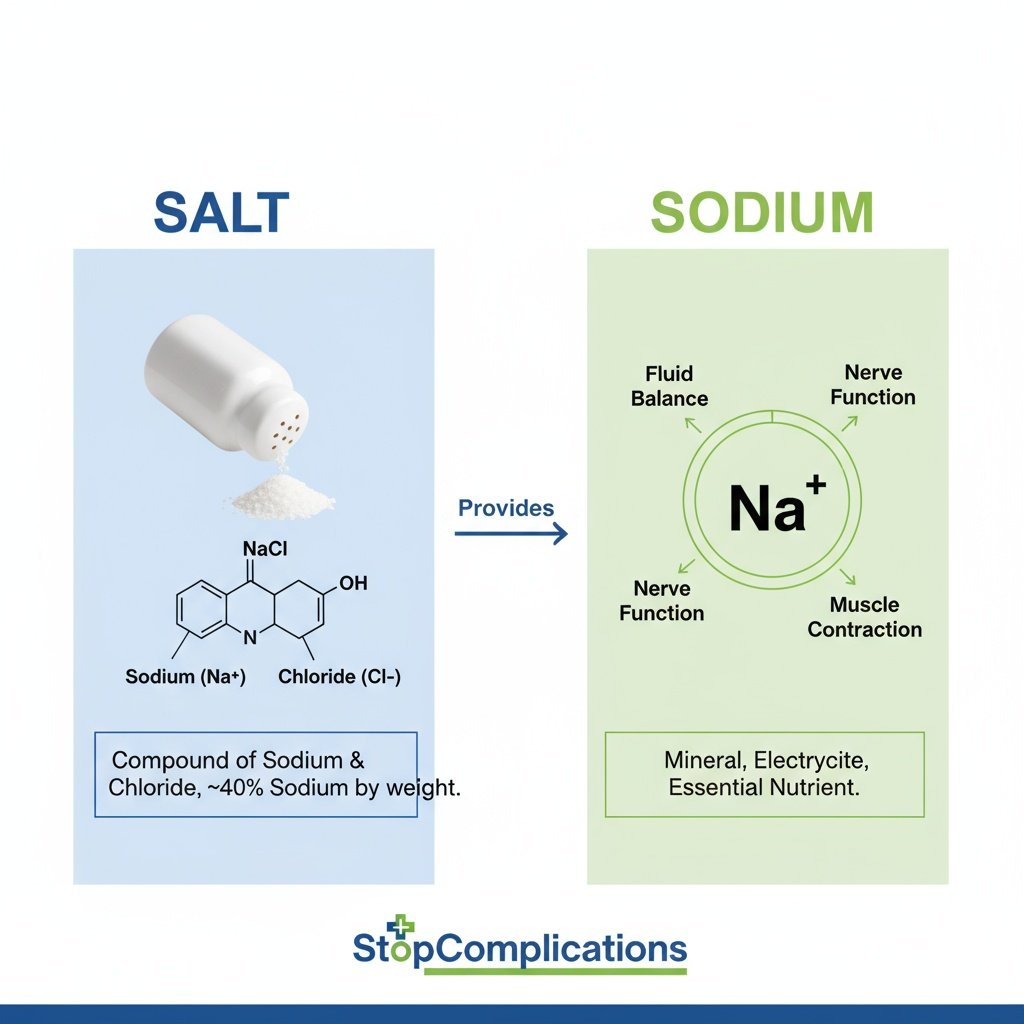
Q: Can I completely cut out sodium from my diet?AA: No, sodium is an essential mineral for nerve and muscle function and maintaining fluid balance. The goal isn’t to eliminate it, but to consume it in moderate, healthy amounts (typically under 2,300 mg per day, or less if recommended by your doctor).
Q: What is “sodium-free” vs. “very low sodium” vs. “low sodium” on a label?AA:
- Sodium-Free: Less than 5 mg of sodium per serving.
- Very Low Sodium: 35 mg or less of sodium per serving.
- Low Sodium: 140 mg or less of sodium per serving.
Q: Does potassium help balance sodium?AA: Yes, potassium and sodium work together to maintain fluid balance and blood pressure. Increasing potassium-rich foods (like fruits, vegetables, and lean meats) while reducing sodium intake can help regulate blood pressure and promote better cardiovascular health.